
Fashioning Economies of Care
AARE 2025 Conference University of Newcastle 30 Nov-4 Dec
Abstract (full paper presented)
Fashioning Economies of Care
Fashion and dress education has a gendered history, where the production and care of garments were seen as women’s work. With the introduction of the state-funded secondary school system in Victoria, legislation reinforced this gendered difference, where all girls were provided with practical instruction in the domestic arts. Underpinned by the ideals of the domestic economy curriculum, fashion and food formed the basis for courses of study to support women in caring for their families, caring for their homes and caring for themselves.
The introduction of fashion education to the tertiary sector signalled an important shift, where subjects based around the production of garments, competed with newer subjects of fashion theory, digital technologies and the merchandising of fashion. The merchandising of fashion products became an alternative curriculum stream for the fashion graduate, where new opportunities were opening in fashion business, retailing and fashion management. As the cost of local fashion production increased, the manufacture of garments moved offshore and along with higher numbers of students entering tertiary education across all fields of study, the consumption and production of fashion clothing increased significantly.
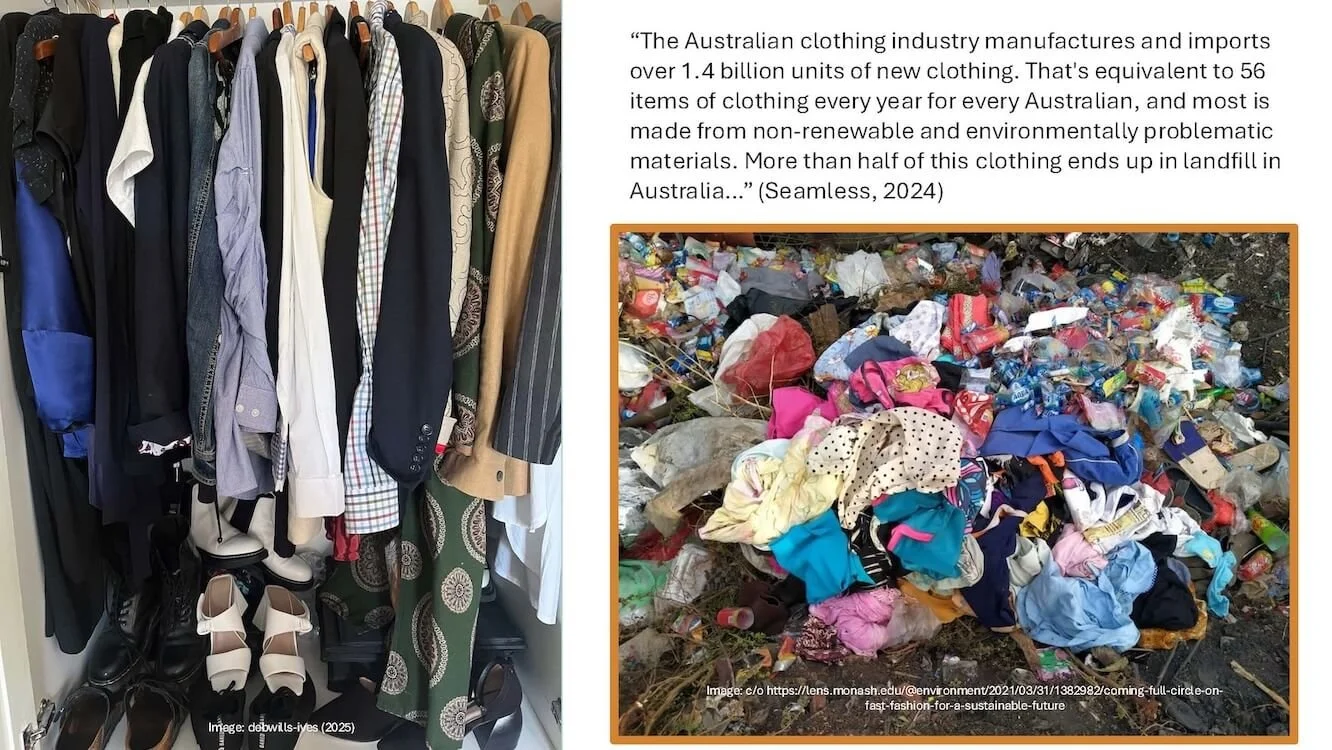
To address local and international environmental concerns over the tonnes of fashion and textile waste generated, sustainable fashion practices now form an important part of contemporary fashion education. These practices include core courses based on the reuse, recycling and repair of garments, the repurposing of textile material extracted from existing garments and a range of innovations designed to support an increased culture of care; care for clothing, people and the planet.
The establishment of Seamless: Australia’s Clothing Stewardship Scheme in 2024 is proposed as an arbiter of change. Clothing brands that commit to the scheme pay a levy to collectively support research into how Australians need to think differently about their clothes.
The aim of this paper is to draw from the history of fashion and dress education to present an argument for new connections to be forged, between fashion educators and teachers from schools outside fashion. I argue, in light of the key areas for research as outlined by Seamless, that there is an imperative to refashion the traditional ideals of care and repair, reuse and recycling without the gendered bias of the early domestic economy curriculum.